
Polyester Bag Fabric Guide for Custom Bags
Polyester bag fabric is fabric made with polyester fibres for uses such as outer panels, linings, and pockets. For a bag project, the name alone is not enough: buyers need to match the fabric construction, finish, and sample to the intended use.
Start with the job the fabric must do. A drawstring bag, backpack, travel bag, tote, cosmetic bag, and lining do not need the same structure. Compare the actual swatch and finished sample instead of selecting polyester from a name, photo, or denier number alone.
What Buyers Should Decide Before Discussing Denier
| Buyer decision | What to confirm | Why it matters |
|---|---|---|
| Product and fabric role | Bag type, intended use, and whether the fabric is for the body, lining, or pockets | Requirements differ by product and fabric role |
| Surface and finish | Construction, hand feel, opacity, flexibility, and coating or backing | These determine what the buyer needs to inspect on both sides of the swatch |
| Finished-bag construction | Lining, padding, reinforcement, seams, zippers, webbing, handles, and hardware | Fabric is only one part of the finished result |
| Branding | Logo method, artwork, position, size, color, and surface compatibility | A logo should be reviewed on the actual material and panel construction |
| Evidence | Supplier specification, verified material identity, swatch, sample, and required test documents | Approval should be based on the actual order material, not a generic photo |
If the material family is still open, use the Bag Material Selection Guide before choosing a denier or coating.
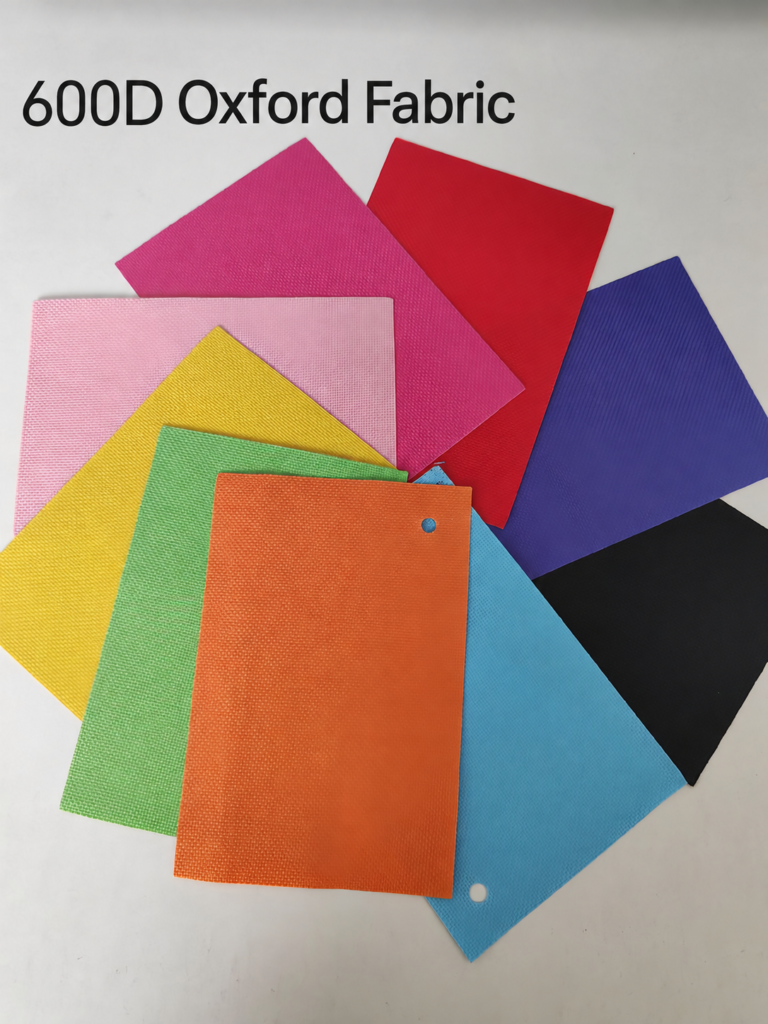
What Polyester Means in Bag Manufacturing
Polyester identifies the fibre, not a single fabric construction. Two polyester fabrics can have different weaves, surfaces, back treatments, hand feel, and production behavior.
The material name does not establish performance. For requirements such as abrasion resistance, tear strength, or colorfastness, agree on the test method and obtain evidence for the actual order material.
When Polyester May Be a Practical Direction
Polyester may be considered when the buyer needs a synthetic fabric direction for a backpack, travel bag, drawstring bag, sports bag, organizer, lining, promotional bag, or selected tote. The decision still depends on the actual fabric, product structure, logo, cost target, quantity, sample result, and available supply path.
For custom backpacks, review polyester together with lining, padding, zippers, straps, webbing, pockets, reinforcement, and stress points. For custom travel bags, add bottom construction, handling, webbing, zipper behavior, packing volume, and the required performance or inspection plan.
For drawstring or promotional projects, review surface, opacity, drawcord, seam construction, logo method, packing, and target cost. For custom tote bags, compare polyester with the desired hand feel, foldability, handle construction, branding, and sales-channel presentation.
Comparing Fibre Choices and Fabric Constructions
- Compare canvas when natural texture, a heavier hand feel, or a merchandise-style tote direction is important.
- Compare RPET when recycled-content positioning is required, but treat supplier documentation and order-specific claim support as part of the decision.
- Compare non-woven polypropylene for a cost-sensitive promotional tote direction where construction and presentation requirements differ from a woven polyester bag.
- Compare nylon when a technical or lightweight material direction is being evaluated; do not assume nylon or polyester is stronger without an actual specification and test basis.
Oxford fabric describes a fabric construction, not a fibre category. A polyester fabric can also be Oxford. If a brief specifies Oxford, confirm its fibre content and finish rather than treating it as an alternative to polyester.
Denier Is One Field in a Polyester Specification
Polyester quotations may include labels such as 210D, 300D, 600D, 900D, or 1680D. Denier describes yarn or filament linear density; it is not a quality grade for the whole fabric and does not prove finished-bag performance.
Compare denier numbers only alongside the actual fabric specifications and swatches. Differences in construction or back treatment can make a number-only comparison misleading.
For the measurement difference and conversion limits, use the GSM vs Denier Bag Fabric Guide. For a focused 600D discussion, use the 600D Polyester Guide.
How to Evaluate an Actual Polyester Fabric
Confirm the material identity
Ask the supplier to identify the material and provide the order-relevant specification. If the buyer needs a fiber-content, recycled-content, certification, or compliance claim, state the required documentation before approving the material.
Check the face and back
Review the visible face and the reverse side. Note the weave or surface, color, finish, coating or backing, flexibility, and any differences that may affect sewing, lining, folding, or logo application.
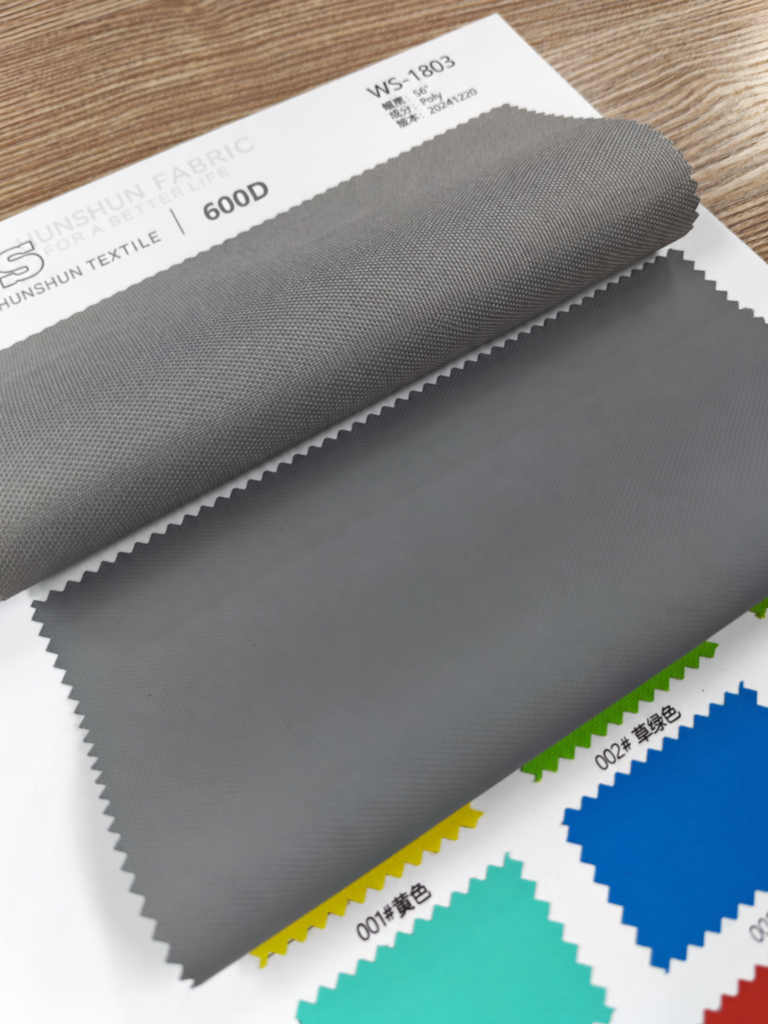
Compare the swatch with the product job
A swatch can show material direction, but it does not show how a complete bag will carry, open, fold, or hold shape. Review it with the dimensions, seams, lining, padding, reinforcement, zippers, webbing, and hardware.
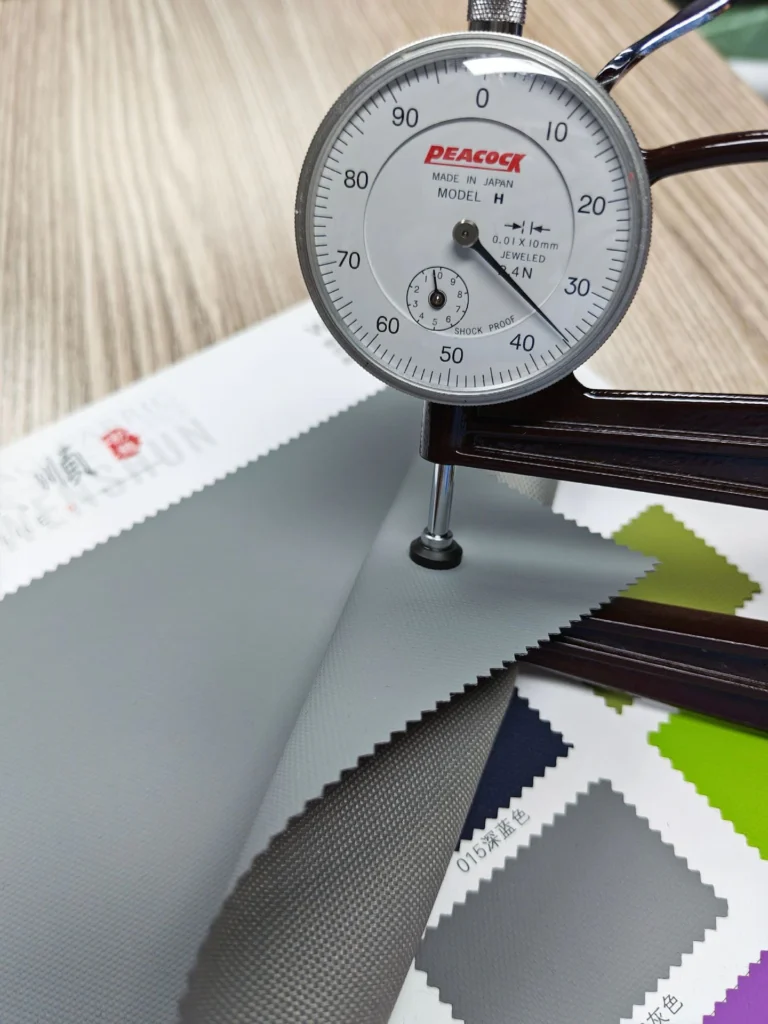
Test the branding direction on the actual surface
Screen printing, heat transfer, embroidery, labels, and patches may behave differently on lightweight, coated, textured, or padded panels. Approve the method, artwork, placement, and sample result before bulk production.
Approve the finished sample and written specification together
Keep a written reference for the material, color, back treatment, logo, structure, and trims that were approved. A physical sample without a controlled specification can leave important repeat-order details unclear.
Polyester Compared With Other Bag Material Directions
| Material direction | Buyer may consider it for | What still needs confirmation | Claim boundary |
|---|---|---|---|
| Polyester | Backpacks, travel bags, drawstring bags, sports bags, organizers, linings, promotional bags, and selected totes | Construction, denier if used, coating/backing, lining, reinforcement, logo, trims, and sample | Do not infer waterproof or durability performance from “polyester” |
| RPET | Projects requiring a recycled-polyester direction | Supplier chain, actual recycled-content documentation, availability, color, coating, and sample | Do not make recycled or certification claims without order-specific support |
| Canvas | Totes and merchandise where texture and hand feel are important | Fiber content, weave, weight, finish, shrinkage concern, logo, handles, and sample | Natural appearance does not prove organic, recycled, or sustainable status |
| Non-woven polypropylene | Cost-sensitive promotional totes and shopping-bag directions | GSM, construction, lamination, gusset, handles, bonding or stitching, logo, and intended use | Do not assume reusable, recyclable, or environmental claims |
| Nylon | Selected lightweight or technical bag directions | Exact material, denier if used, construction, coating, logo compatibility, cost, and sample | Do not rank strength without comparable specifications and testing |
Coating, Lining, Reinforcement, and Logo Method
Coating or backing can change surface feel, stiffness, flexibility, sewing behavior, and logo compatibility. It may support a water-resistance direction, but the finished bag also includes seams, needle holes, zippers, closures, and construction details. Use the Water-Resistant vs Waterproof Bags Guide before approving claim wording.
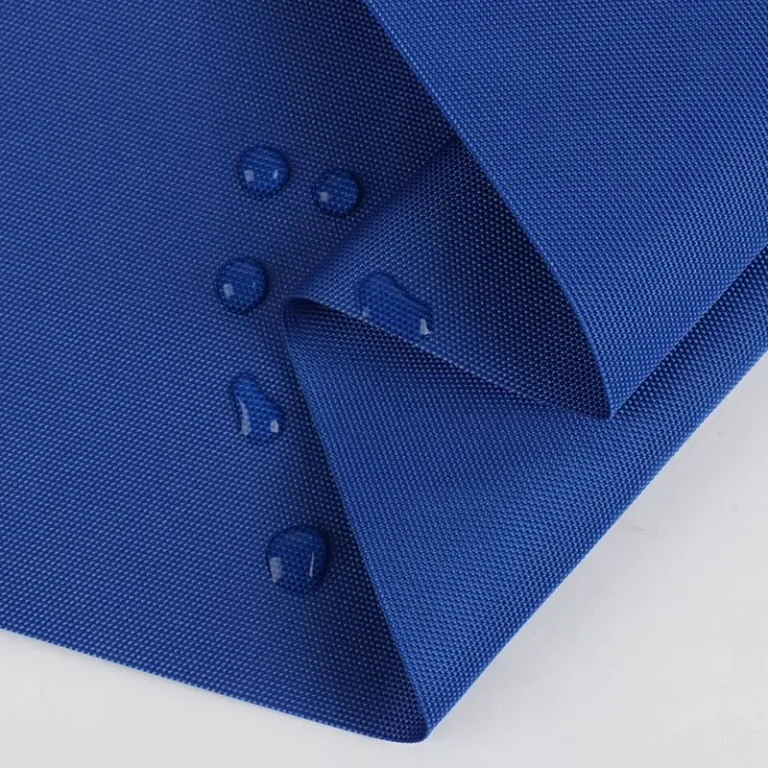
Lining, padding, binding, bottom panels, handle or strap reinforcement, zippers, webbing, and hardware should be reviewed as part of the same product system. If the project needs a measurable performance result, define the test and acceptance requirement rather than assuming the outer fabric determines the outcome.
Logo selection also belongs in the material decision. The Custom Bag Logo Methods Guide explains the wider options, but the final method should be approved on the actual polyester surface and panel construction.
What to Put in a Polyester Bag RFQ
For the material decision, send:
- bag type, intended use, and fabric role;
- whether polyester is required, with any known fibre-content, weave, or denier specification;
- target hand feel, structure, color, and surface appearance;
- coating, backing, or lamination requirements and any lining compatibility concerns;
- intended logo method and the surface where it will be applied;
- a documented swatch or sample reference, plus required tests or claim documentation.
For quantities, dimensions, components, packaging, timing, and the complete production brief, use the Bag Specification Sheet Guide. Mark undecided material fields as open to recommendation.
FAQ
What is polyester bag material?
It is fabric made with polyester fibres, used for bag bodies or components. The fibre name alone does not identify the finished fabric specification.
Is polyester suitable for backpacks?
It may be. Evaluate the fabric in a backpack sample that reflects the intended contents, carrying method, and construction.
Does a higher denier mean better polyester bag fabric?
No. Denier measures yarn or filament linear density, not overall quality. A higher number is not a substitute for comparing fabric specifications and samples.
Is polyester bag fabric waterproof?
Do not assume so. A coating may support a water-resistance direction, but seams, zippers, closures, construction, and the test method affect any finished-product claim.
What is the difference between polyester and RPET?
RPET is used for a recycled-polyester direction. If recycled content or certification is part of the product claim, verify the order-specific material and documentation rather than relying on the material name alone.
What should I check on a polyester swatch?
Check its documented identity, both surfaces, hand feel, and suitability for the intended bag. The evaluation sequence above explains how to carry those checks through to sample approval.
What information is needed before sampling?
Provide the material inputs listed above alongside the complete product brief. Identify what is fixed and what the manufacturer should recommend before developing the sample.
Review the Actual Fabric Before Sampling
The useful question is not simply “Is polyester good?” It is whether a documented polyester construction fits the product, branding, commercial plan, and approval requirements. Send Northline Bags the product brief and open material decisions for a project-specific review.