Custom Backpack Manufacturer
Northline Bags supports B2B buyers developing custom backpacks for retail, corporate, promotional, school, travel, outdoor, and private-label programs. A workable project starts with the intended user, approximate size, compartment layout, carrying requirements, material direction, branding, quantity range, and packaging needs. These inputs allow the backpack structure, sample route, and quotation factors to be reviewed together before production is approved.
Backpack Projects We Manufacture
Different backpack programs require different structures. The intended use should guide the compartment plan, carrying system, materials, reinforcement, and branding instead of starting from appearance alone.
Laptop And Business Backpacks
Business backpack projects may need a padded device sleeve, document space, organizer pockets, a stable base, a clean front panel, and a carrying system suited to regular commuting. Buyers should identify the device size, expected contents, preferred opening, and whether the design needs a luggage strap, top handle, or additional access points.
School And Promotional Backpacks
School and promotional programs often prioritize practical storage, visible branding, repeatable colors, and an appropriate balance between structure and cost. The project brief should state the user age group, carrying load, pocket requirements, logo size, distribution channel, and packing method. Child-use or market-specific requirements must be reviewed separately when applicable.
Travel And Outdoor Backpacks
Travel and outdoor directions can involve larger openings, compression straps, bottle pockets, adjustable webbing, buckles, and reinforced carrying points. The buyer should define the intended activity and load before selecting a fabric or describing a bag as suitable for a demanding environment. Water resistance, load performance, and other functional claims require project-specific materials, construction, and agreed testing criteria.
Private-Label Backpack Programs
Private-label projects combine product construction with brand application, labels, packaging, and repeat-order control. A reference sample or existing design can shorten the initial discussion, but the final specification still needs to identify dimensions, materials, compartments, hardware, logo placement, tolerances, and packing requirements.
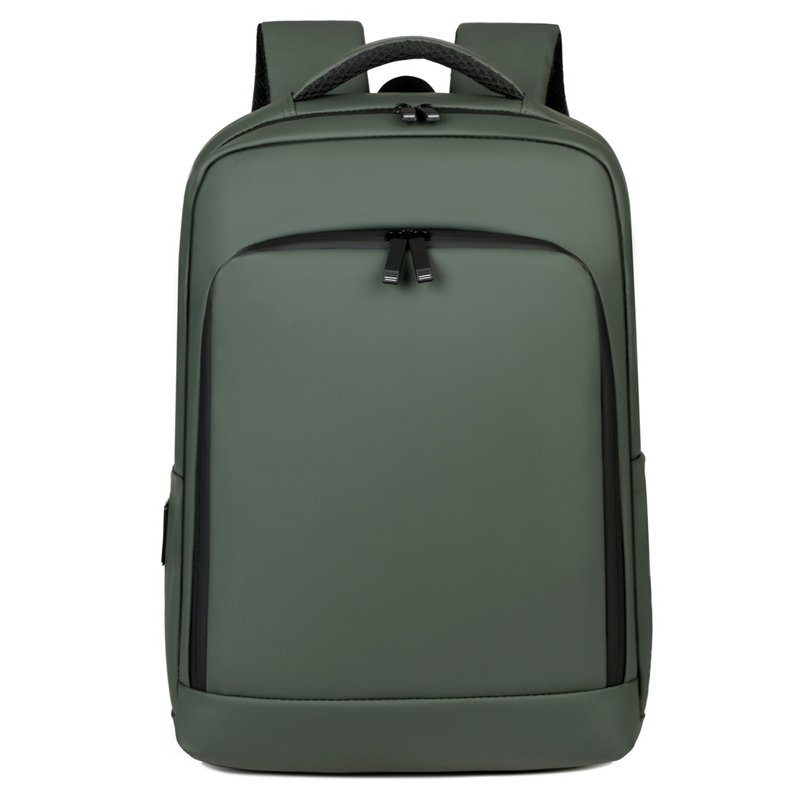
Business and laptop backpack direction with a structured shell and organized access.
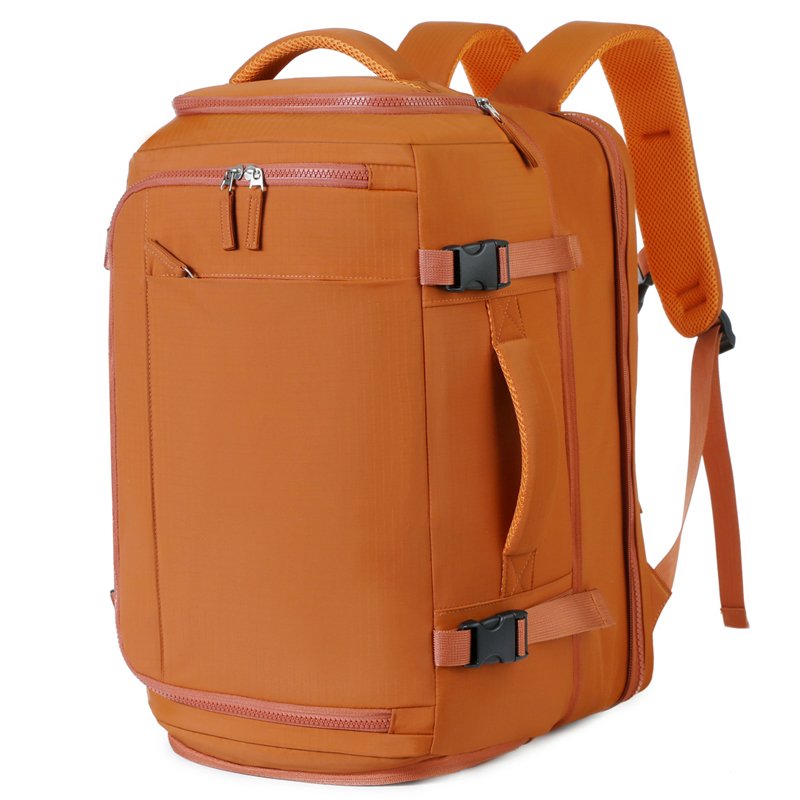
Convertible travel and outdoor backpack direction with side compression and multiple carry options.
What Makes A Backpack Buildable
A backpack is a connected structure. Changing the laptop sleeve can affect the main compartment. Increasing capacity can change the pattern, reinforcement, strap geometry, and material use. Moving a logo can conflict with a zipper, pocket, seam, or padded panel. These decisions should therefore be reviewed as one specification rather than as separate visual requests.
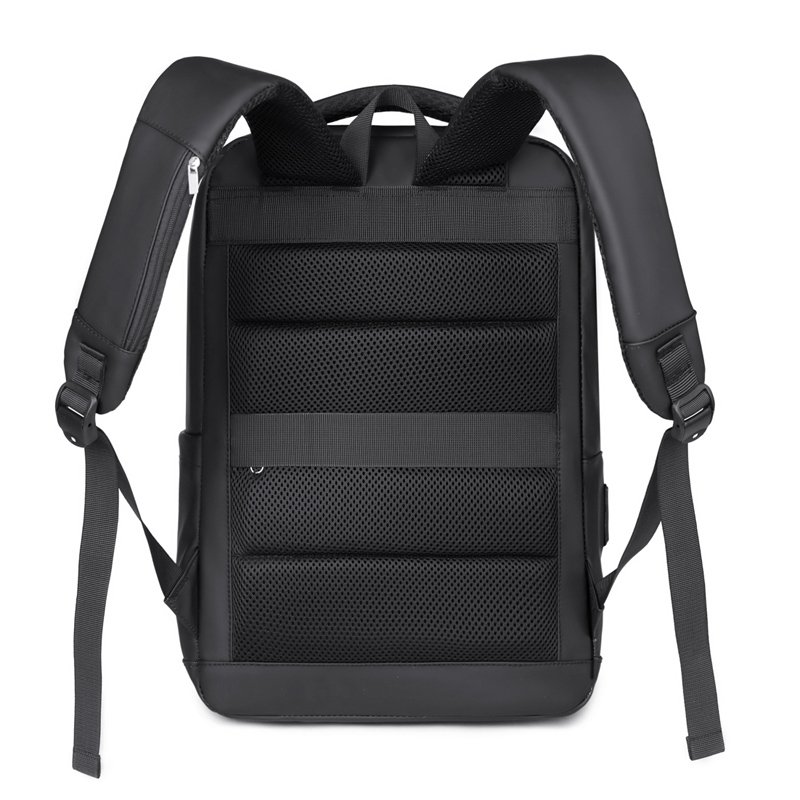
Padded shoulder straps and a segmented back panel should be reviewed as part of the complete carrying system.
| Backpack area | Buyer decision | What should be checked in the sample |
|---|---|---|
| Main compartment | Opening style, capacity, lining, dividers, and access | Usable space, opening movement, seam position, and item access |
| Laptop sleeve and pockets | Device size, padding direction, pocket count, and closure | Fit, clearance, placement, protection direction, and sewing accuracy |
| Shoulder straps and back panel | Strap width, adjustment range, foam, mesh, and back-panel shape | Attachment position, symmetry, comfort direction, and finished appearance |
| Handles and stress points | Carrying method, reinforcement patch, webbing, rivet, or stitch detail | Alignment, attachment construction, edge finish, and agreed reinforcement |
| Zippers, buckles, and hardware | Size, finish, color, puller direction, and operating method | Compatibility, movement, placement, appearance, and attachment |
Material choice should follow the use case and structure. If the material direction is still open, the Bag Materials hub provides a broader comparison. For projects considering polyester for the shell or lining, the Polyester Bag Fabric Guide explains the questions buyers should settle before sampling.
OEM And ODM Backpack Development
An OEM backpack project normally begins with a more complete reference: a tech pack, measurements, artwork, a reference sample, or an approved construction. An ODM project may begin with a use case, target customer, feature list, or product direction that still needs to be translated into a buildable specification. In both routes, the approved sample and written specification should become the shared production reference.
Define The Brief
Confirm the user, backpack type, approximate dimensions or capacity, main compartments, carrying method, material direction, branding, quantity range, packaging, and target market. Reference photos are useful when the buyer identifies which detail each photo is meant to explain.
Prepare And Review The Sample
Sampling turns the brief into a physical structure. This is when the buyer can review proportion, access, pocket placement, device fit, strap position, back-panel construction, logo scale, hardware, and overall appearance.
Control Revisions
Revision notes should identify the exact area, requested change, measurement or reference, and approval status. A consolidated revision list reduces conflicting instructions and helps both sides compare the next sample against the same requirements.
Approve The Production Reference
Before bulk production, the approved sample, specification, artwork, color direction, components, labels, packaging, and quantity should agree. The wider sequence is explained in the Custom Bag Manufacturing Process Guide.
For buyers still deciding between development routes, the OEM And ODM Custom Bag Manufacturing Guide provides the broader sourcing framework.
Branding Planned With Material And Panel Construction
Branding should be reviewed with the selected panel, fabric, seam layout, and intended visual effect. Embroidery adds thread and stitch density. Screen printing and heat transfer depend on the surface and artwork. Woven labels, rubber or PU patches, metal plates, and custom zipper pullers each add their own size, placement, attachment, and sample-review requirements.
Provide vector artwork when available, together with the required colors, approximate finished size, and preferred position. The sample should confirm that the branding is readable, correctly placed, compatible with the material, and clear of seams, pockets, zippers, and padded areas. A visual reference is useful, but it should not replace approved artwork and dimensions.
What To Send For A Backpack Quote
A useful request does not need to be a finished technical package, but it should give enough information to identify the development route and unresolved decisions.
When a detail is not yet decided, state the required outcome rather than guessing a material or construction. For example, explain the device that must fit, the items that must be organized, or the carrying situation the bag must support. This gives the development discussion a practical starting point.
Sample And Quality Review
Backpack review should follow the approved specification and sample, with attention to both appearance and function. The review points depend on the project, but commonly include overall dimensions, panel shape, compartment layout, zipper movement, pocket access, strap symmetry, handle attachment, reinforcement, stitching, logo position, hardware finish, labels, and packaging.
Visible inspection does not prove every performance claim. If a buyer requires a particular load, abrasion, colorfastness, water-resistance, chemical, or market-compliance result, the requirement and test method should be agreed before production. Supporting documents and third-party testing should be arranged where the project or destination market requires them.
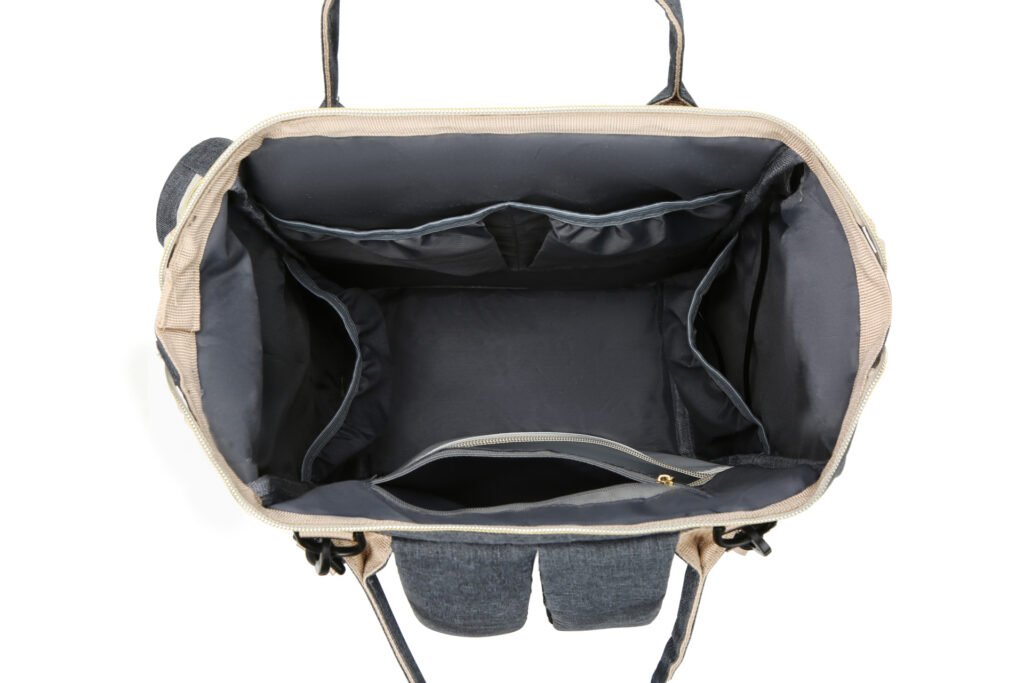
An open interior view helps review divided pockets, lining, access, and compartment organization.
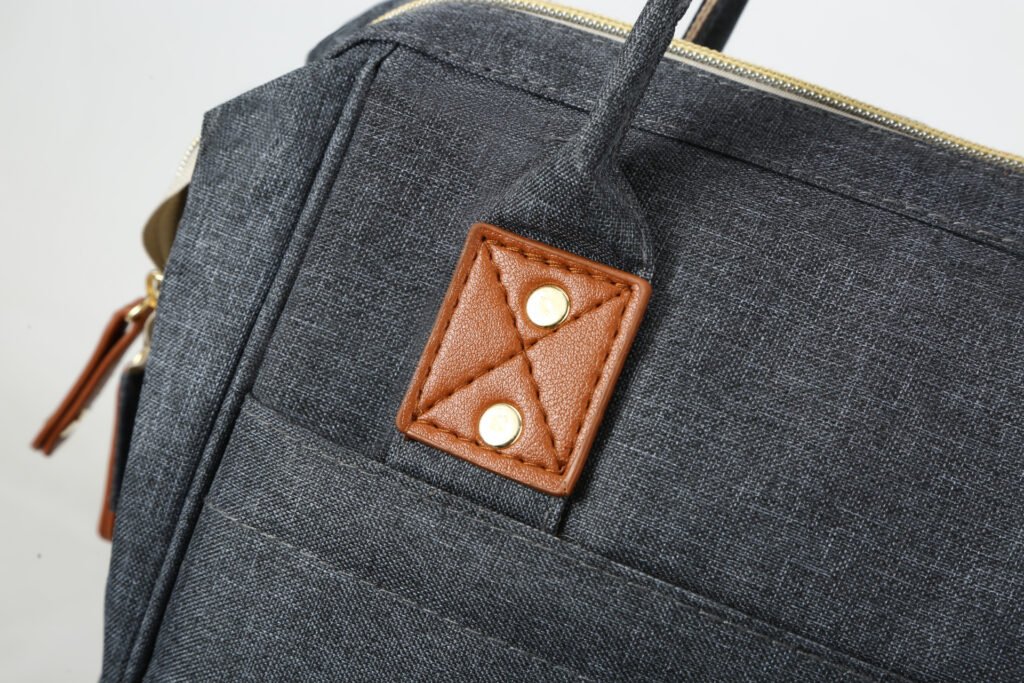
A close view of the top handle shows how attachment, stitching, patches, and rivets work together.
Custom Manufacturing Or Wholesale Sourcing?
This page is for buyers developing a backpack around their own structure, material, branding, and specification. If the project is primarily about selecting an existing style for a bulk purchasing program, review Wholesale Backpacks for Quantity-Led Sourcing instead.
Frequently Asked Questions
What Information Is Needed To Start A Custom Backpack Project?
Start with the intended user, use case, approximate size, required compartments, carrying system, material direction, logo, quantity range, packaging, and target market. A sketch, reference sample, tech pack, or annotated photos can make the first review more precise.
Can You Develop A Backpack From A Reference Sample Or Product Idea?
Both can be useful starting points. A reference sample helps communicate proportion and construction, while an idea still needs to be translated into dimensions, compartments, materials, hardware, branding, and approval criteria. The development route depends on how complete the buyer’s information is.
How Should A Laptop Compartment Be Specified?
Identify the device dimensions, desired padding direction, sleeve position, closure, clearance, and any adjacent document or accessory storage. The physical sample should be checked for fit and access before approval.
Which Material Is Best For A Custom Backpack?
There is no single best material for every project. The decision depends on use, structure, appearance, target cost, logo method, required documents, and any agreed performance criteria. Material samples should be reviewed together with the backpack construction.
Can The Backpack Include Custom Logos, Labels, And Hardware?
These elements can be reviewed as part of a custom project. Feasibility depends on the artwork, material, size, placement, attachment method, component availability, quantity, and sample result. Final branding should be approved on the relevant material and panel.
How Is The Production Version Confirmed?
The approved sample and written specification should agree on dimensions, construction, materials, colors, components, artwork, labels, packaging, and quantity. Any accepted revision should be recorded before production approval.
Prepare Your Backpack Project For Review
Send your intended use, size, compartment plan, material direction, branding files, quantity range, target market, and reference materials. Northline Bags can review the available information and identify what still needs to be confirmed before sampling and quotation.