
GSM vs Denier: Bag Fabric Weight Guide for Custom Bags
GSM and denier measure different things. GSM expresses fabric mass per unit area, while denier describes the linear density of a yarn or filament—mass in relation to length. They are not interchangeable, and there is no universal GSM-to-denier conversion for bag fabrics.
For a custom bag quotation, connect the fabric number to the intended product and use. The RFQ table and approval checklist below show which details to provide.
GSM vs Denier at a Glance
| Buyer question | GSM | Denier |
|---|---|---|
| What does it describe? | Fabric mass per unit area | Yarn or filament linear density |
| Where may a bag buyer see it? | Canvas, cotton, non-woven polypropylene, and other fabrics quoted by area weight | Polyester, nylon, Oxford, and other synthetic fabric descriptions |
| What does it not prove? | Finished-bag strength, handle security, load capacity, or durability | Finished-bag strength, abrasion result, waterproof performance, or durability |
| Can it be converted directly to the other unit? | No universal conversion | No universal conversion |
What GSM Tells a Bag Buyer
GSM means grams per square metre. It is a mass-per-area description used in textile specifications. In bag sourcing, buyers often encounter GSM when discussing canvas or cotton totes, non-woven shopping bags, promotional bags, and other materials quoted by area weight.
For a tote or promotional bag, review GSM alongside its dimensions and handle construction. The Canvas Bag Material Guide and Non-Woven Tote Bag Material Guide provide the material-specific context.
What Denier Tells a Bag Buyer
Denier is a linear-density description for yarn or filament. In bag sourcing, buyers often see it in polyester, nylon, and Oxford fabric descriptions, including labels such as 210D, 300D, 600D, 900D, or 1680D.
Denier identifies the yarn specification direction. The quotation should also identify the fabric construction and any coating or backing, rather than treating the D label as a complete specification.
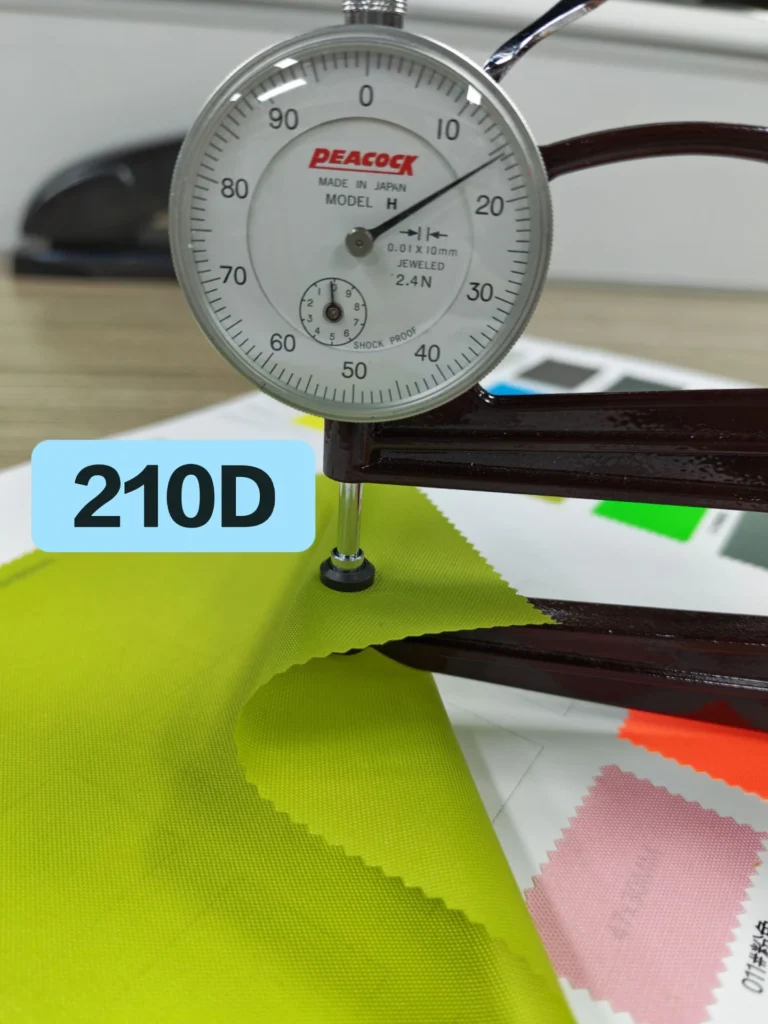
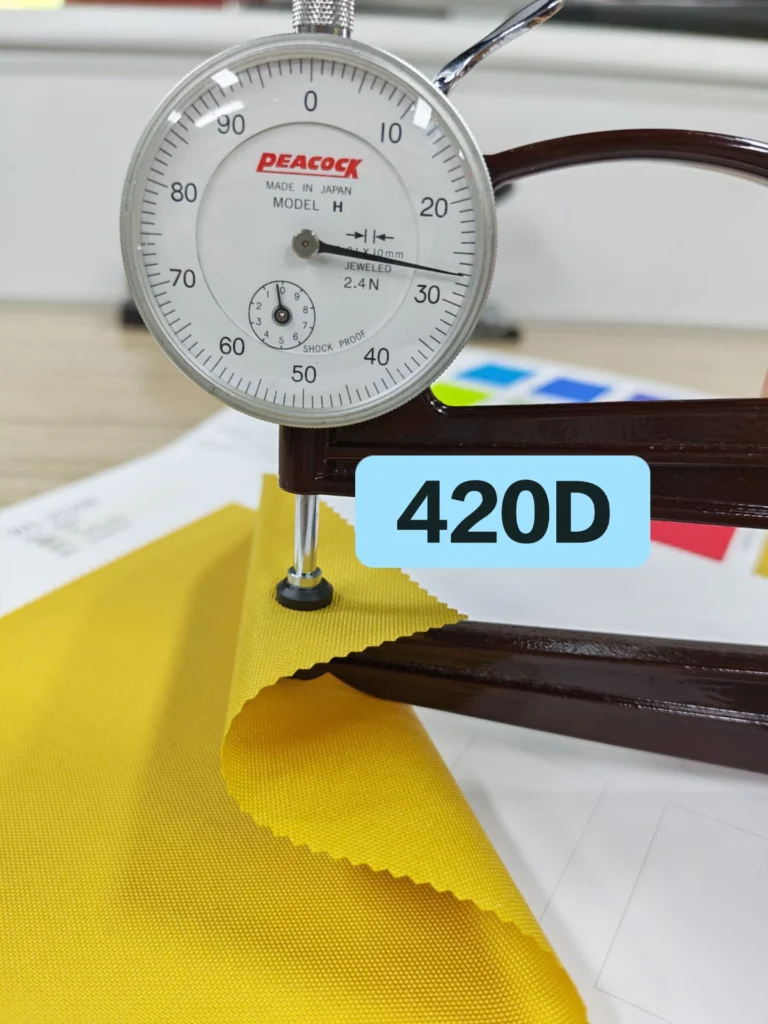
If the project uses polyester, review the Polyester Bag Fabric Guide. If the quotation refers specifically to 600D, the 600D Polyester Guide explains what still needs to be confirmed before sampling.
Why There Is No Universal GSM-to-Denier Conversion
GSM measures an area of finished fabric. Denier measures yarn or filament in relation to length. A finished fabric combines yarn or filament with construction variables such as weave density, yarn arrangement, coating, backing, lamination, and finishing. Those variables affect the fabric’s mass per area without turning GSM and denier into the same measurement.
A relationship may be discussed for one known fabric construction, but it should not be reused as a universal calculator across canvas, non-woven polypropylene, polyester, nylon, Oxford, coated fabric, and laminated material.
When a supplier gives one value and the buyer asks for the other, request the full material specification and a representative swatch. If the decision affects a claim or required performance result, define the required test method instead of inferring performance from GSM or denier.
Which Term Should You Put in a Bag RFQ?
| Product or material direction | Useful starting language | Add these details before quotation or sampling |
|---|---|---|
| Canvas or cotton tote | GSM or the supplier’s stated area-weight convention | Fiber content, weave, finish, color, shrinkage concern, bag dimensions, handles, logo method, and approved swatch |
| Non-woven tote or shopping bag | GSM | Material construction, lamination if any, gusset, handle type, bonding or stitching, dimensions, logo method, and intended use |
| Polyester backpack or travel bag | Denier when used by the supplier | Fabric construction, coating or backing, lining, padding, reinforcement, zippers, webbing, logo method, and sample review |
| Nylon or Oxford project | Denier when used by the supplier | Exact material identification, construction, coating or backing, finish, product structure, trim plan, and sample review |
| Coated or laminated fabric | Base-fabric specification plus coating/backing details | Surface and back views, coating or lamination type if documented, flexibility, logo compatibility, seam/zipper construction, claim wording, and test needs |
| Material still undecided | Product and use requirements rather than a guessed number | Product type, dimensions, use case, target hand feel, structure, target cost, logo, packing, and sales-channel requirements |
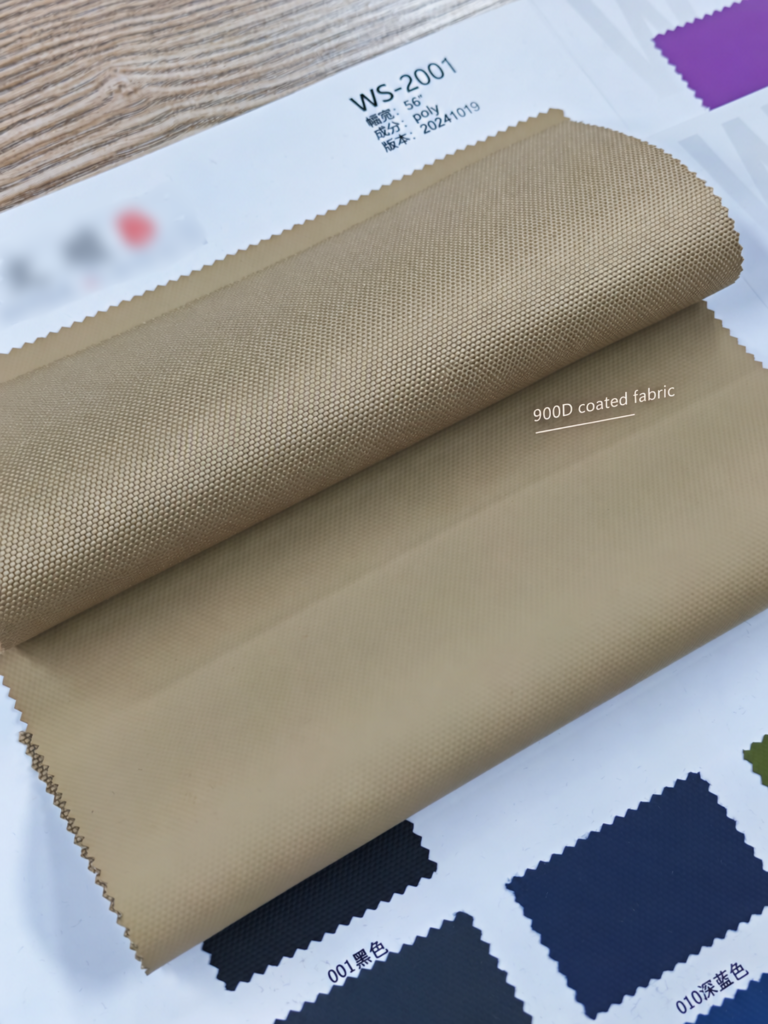
The Bag Material Selection Guide is the better starting point when the buyer has not yet chosen a material family.
Why the Same Number Can Produce a Different Result
Use a side-by-side swatch review to check what a shared number leaves out:
- Two denier-labelled fabrics may use different weave, coating, backing, finish, or supplier construction.
- Two GSM-labelled non-woven materials may differ in lamination, bonding, handle construction, gusset, and finished bag size.
- Two canvas fabrics with similar area weight may differ in fiber content, weave, finish, shrinkage behavior, print surface, and hand feel.
Carry the chosen swatch reference into the sample approval so the selection can be traced.
How GSM and Denier Affect Different Bag Decisions
Tote and promotional bags
Tote projects connect fabric choice to handle attachment, folding, and branding. See Custom Tote Bag Manufacturer for product development.
Backpacks
For backpacks, the outer fabric is only one part of the design. Review padding, compartment layout, and strap attachment in the finished sample; a denier label cannot confirm whether those details suit the intended contents and carrying method. See Custom Backpack Manufacturer for the product brief.
Travel bags
Travel bags need attention to bottom reinforcement, handling, and zipper access. If abrasion or water resistance matters, define the performance test requirement separately. See Custom Travel Bag Manufacturer for project planning.
A Better Fabric Approval Checklist
Before approving the material, confirm:
- material family and fiber-content documentation where required;
- GSM, denier, or other supplier specification used for that material;
- weave, bonding, coating, backing, lamination, finish, and color;
- intended product, dimensions, lining, padding, reinforcement, and trims;
- logo method and result on the actual surface;
- approved swatch or sample reference;
- performance wording and test method if a measurable claim is required;
- packing, target cost, quantity, and repeat-order expectations.
This information gives a factory a clearer target than a request such as “convert this GSM to denier” or “use the highest denier.”
FAQ
Is GSM the same as denier?
No. GSM describes fabric mass per unit area. Denier describes yarn or filament linear density. They answer different specification questions.
Can GSM be converted to denier?
There is no universal conversion. Any relationship depends on a defined material and fabric construction, including weave density, coating, backing, lamination, and finish.
Does a higher GSM mean a stronger finished bag?
No. More fabric mass per area does not establish the strength of the assembled bag.
Does a higher denier mean a stronger finished bag?
No. A yarn’s linear density is not a strength rating for the finished bag.
Should a tote buyer ask for GSM or denier?
Ask which specification the supplier uses for the chosen material; the RFQ table above distinguishes area-weight and denier descriptions.
What should a buyer send instead of asking for a conversion?
Send the completed fabric approval checklist and request a representative swatch with its matching supplier specification.
Specify the Fabric, Not Just the Number
Send Northline Bags your fabric approval checklist and note any undecided requirements. The team can review the material direction before sampling.